
Ironmaking has been done the same way since the Iron Age, using carbon and extreme heat, because it worked and nothing displaced it. Designing it today, with a blank sheet of paper and an understanding of modern physics and chemistry, has delivered something completely revolutionary.
We reduce the ore chemically with sodium, a low temperature heat-generating reaction. In the steel industry, the single step of iron ore reduction accounts for around 80% of lifecycle emissions. The Natrium Redox™ process does the same job with zero process CO₂.
Fixing the reduction step requires two things the industry has never had together: a low-cost non-carbon reductant, and a reduction reaction that doesn't need energy poured into it.
Sodium melts at 98°C and the reduction reaction is exothermic, so the work is controlling the temperature rather than reaching it. That is why the process is economically competitive with existing routes today, without carbon pricing needed to support it.
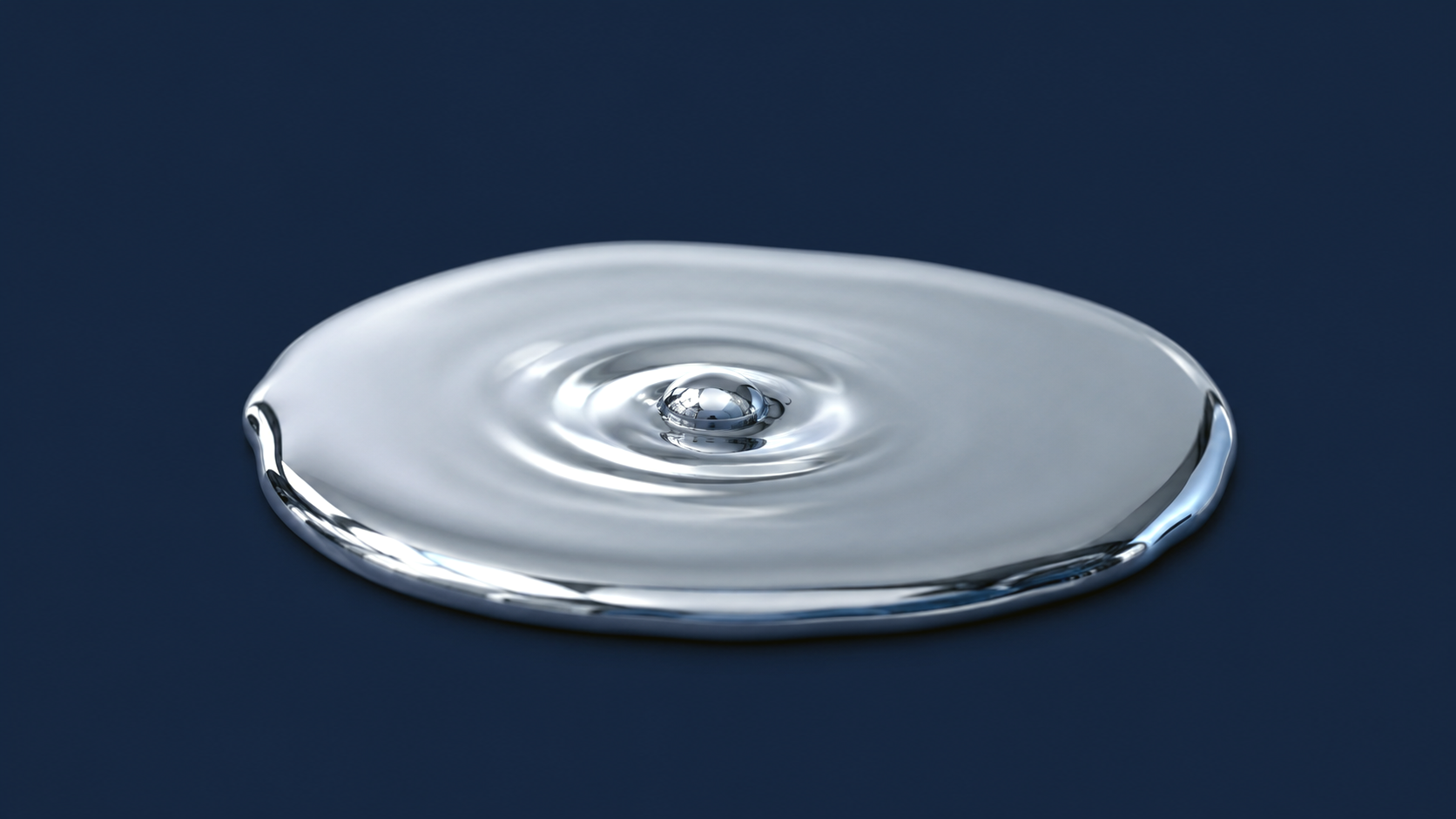
Melting at 98°C, liquid sodium behaves like water and is poured into the reactor.
Ore is metal held to oxygen. Since the Iron Age we have used carbon to break that bond, which is where the emissions come from. Sodium breaks it too, at a fraction of the temperature, and the reaction gives off heat rather than needing it.
We reclaim the sodium and put it back to work.
High-purity metal powder can be bound into briquettes for steel making or sold for its purity.
The cement industry is also a massive emitter of CO₂. Again, with around 92% of the emissions coming from one step in the process, heating limestone to make lime.
By starting with natural salt, we use both elements, sodium and chlorine, to make ultra-pure iron and lime. In this case we recycle the salt, not just the sodium.
We cannot avoid making CO₂ when making lime, but we can control where it goes and how it is handled.
The CO₂ liberated in our process leaves as sodium carbonate, sold into glass making and commodity chemicals, alongside chlorine for industrial chemicals, manufacturing and healthcare. The same route can take CO₂ from a neighbouring plant and convert it into product. These additional revenues are part of why we sit below the cost-curve.
The reduction reaction requires no energy input: it generates energy. And we have an energy efficient way to recycle sodium. The process is far more energy-efficient per tonne than incumbent routes.
Emissions are designed out rather than captured afterwards, and any CO₂ that is liberated is converted into saleable product.
Premium-purity metals from a single plant and a single core reaction.
Cost-competitive with the most modern plants operating today, without a carbon premium.
Adoption does not require abandoning the past and rebuilding anew. We use the same raw materials and produce the same products these industries already make: iron for steelmaking, lime for cement, high-purity manganese for steel and batteries. Our output feeds existing downstream plants as it is.
The reaction releases no CO₂. Where CO₂ is produced in the plant it is captured into sodium carbonate and sold.
The same raw materials as existing processes go in, and the product feeds existing downstream plants as it is.
One system across three industries: steel and metal alloys, cement, and chemicals.
Much less energy per tonne than incumbent routes, competing with the most advanced plants operating today.
Turn-down and inventory management are possible, unlike blast furnaces and lime kilns that must run continuously at extreme temperature.
Deployment across the value chain, and vertical integration where it does not exist today.
The core reduction chemistry has been validated independently of us, the engineering work is done with partners who build industrial plants for a living, and the process itself is protected.

Research partner. Independently validated the core reduction chemistry for both iron and manganese.
Research partner, working on raw material upgrading and product separation.
Research partner, sodium handling expertise and bulk product supplier.